
Young children often show their feelings through play before they can put them into words. Our therapists use toys, art, and games to help children ages 4 to 12 express feelings and practice coping skills, while keeping parents involved. Visits take place at our Scottsdale office.


Ask a five-year-old what’s wrong, and you may just get a shrug. Kids that age often show their feelings instead, through tantrums, trouble sleeping, or the stories they act out with their toys.
In play therapy, a trained therapist uses toys, art, and games to help your child work through those feelings. You stay part of it too, and you’ll learn ways to help at home.
To see all the ways we work with kids, visit our child therapy page. You can also start with a free 15-minute call.
Since 2012, parents across Scottsdale have brought their kids to us for care. Play therapy visits take place at our office on East Shea Boulevard.

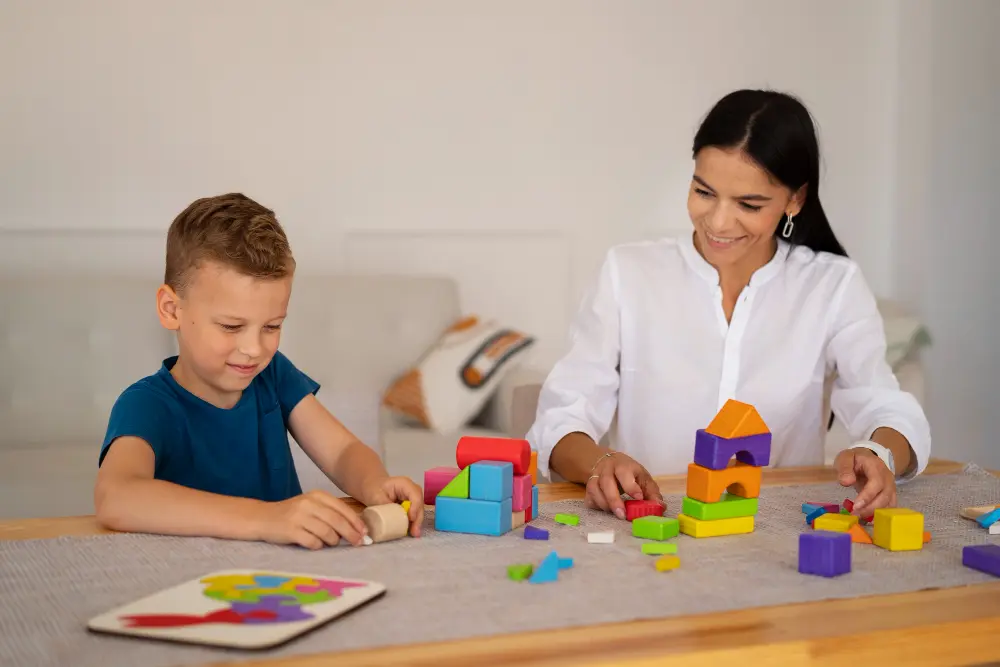
Kids use play to sort out what’s going on around them. Give a child a puppet or a box of crayons, and feelings they can’t explain may start to show up.
Your therapist chooses toys and activities to support your child’s needs and notices patterns in their play. Later, play turns into practice for skills like calming down or telling someone about a worry.
Sometimes your child leads and picks what to play. Other times, the therapist steers things toward one skill. Many therapists use some of each.
Plenty of kids go through rough patches that fade on their own. When a change sticks around, parents often tell us about things like these. Your child’s signs may look different.
A small problem, like the wrong color cup, can turn into a meltdown that lasts an hour. Some kids hit or throw things when they’re upset.
Your therapist might use puppets to act out a frustrating moment. Then your child gets to try a calmer way to handle it, again and again, at their own pace.
Maybe drop-off at school ends in tears every morning. Or your child keeps asking the same question, or won’t go places they used to love.
In the playroom, your child can act out a goodbye with toys before facing the real one. Games are also a fun way to learn simple calming skills.
Big changes are hard on little kids. That might be a move, a divorce, a new baby, or a death in the family. Your child may sleep worse or want to stay close to you.
Many children come back to what happened again and again in their play. Your therapist follows their lead and helps them put names to their feelings when they’re ready.
Something scary can stay with a child. They may play out the event over and over, jump at loud sounds, or go back to habits they’d outgrown.
The first goal is helping your child feel safe with the therapist. When your child is ready, the therapist may help them express their feelings about the event through talk or play. Your therapist will walk you through the plan.

The first visit is 75 minutes, with much of that time spent talking with you. Your therapist will ask about your child’s history and what you’ve noticed at home. Before you come in, we’ll let you know whether to bring your child.
The next few visits are mostly for your child to get comfortable. They’ll explore the room and get to know the therapist without being pushed to talk.
After that, a visit might start with free play and then shift to an activity the therapist picks. The last few minutes are for winding down. You might see things like these in the room.
You see things your child’s therapist won’t. That’s why they’ll ask how bedtime and school mornings are going, and about anything new at home.
Every so often, your therapist may meet with just you, or ask you to join part of your child’s visit. You’ll talk about what’s working and practice new ways to respond at home.
You may also get a small task, like ten minutes of one-on-one play with your child each day. Some weeks will feel harder than others. If things get worse for a stretch, bring it up so your therapist can change the plan.
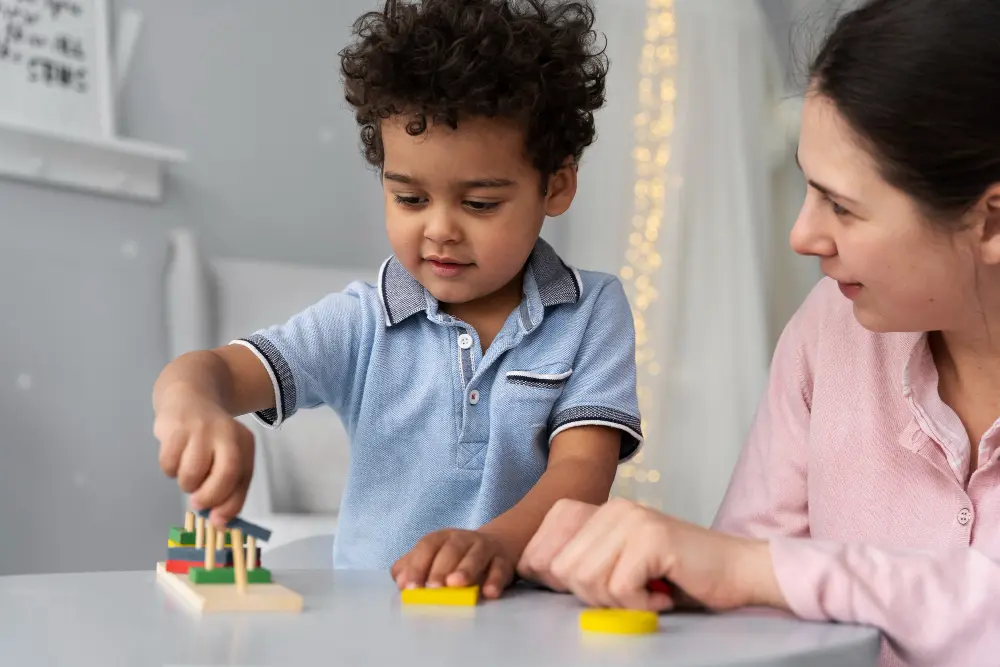

You might wonder how playing with toys could help your child.
It’s not the same as playtime at home. In therapy, each activity has a reason behind it, and every visit works toward goals you and the therapist set together.
Some kids, often older ones, would rather talk than play. For them, your therapist may suggest something like cognitive behavioral therapy (CBT). Feel free to ask about this on the free call.
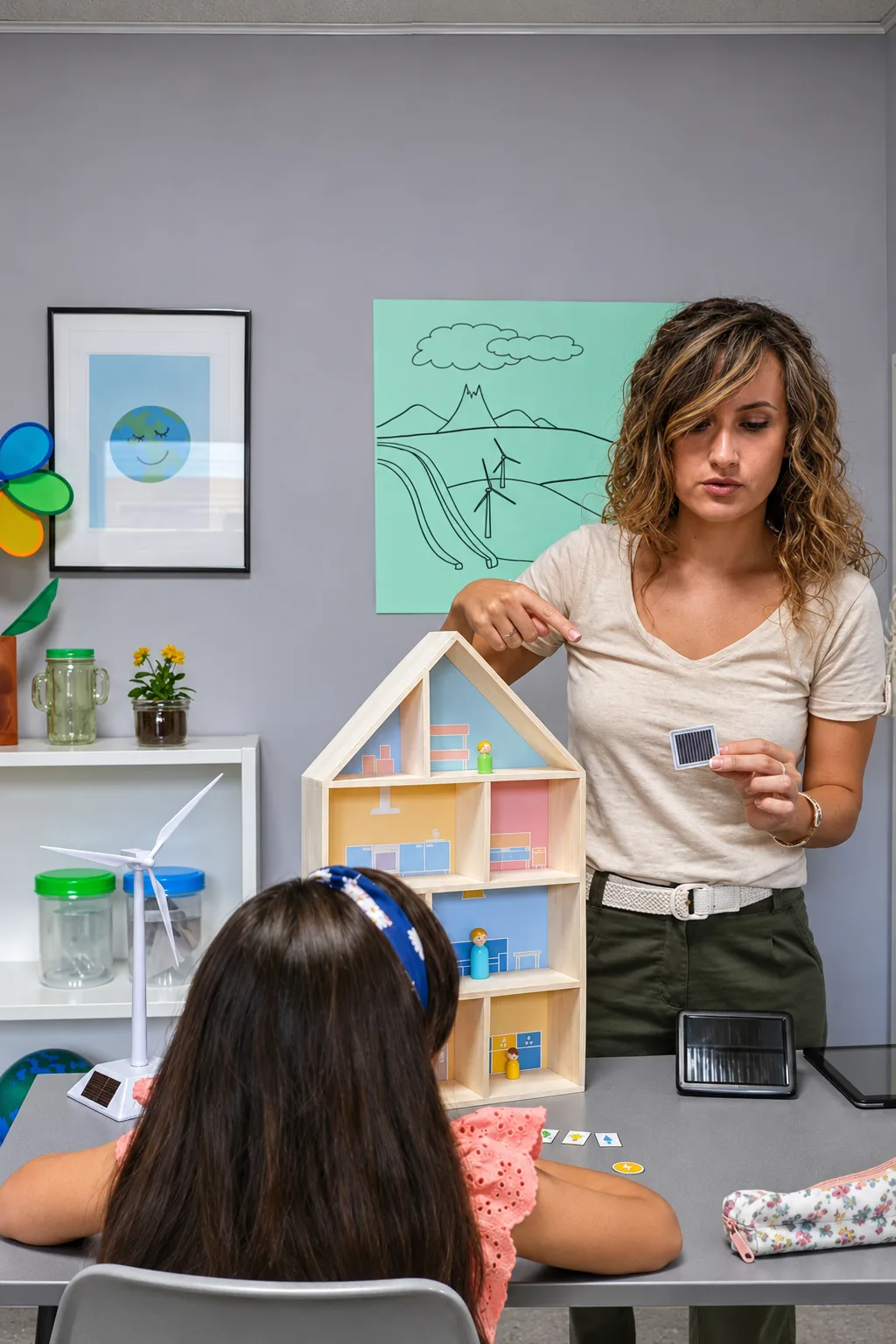
You get to pick your child’s therapist. Visit our team page to see which therapists offer play therapy and the ages they usually see.
Many play therapists have extra training in how children grow and learn through play. On the free call, you can ask about a therapist’s background.
Some kids warm up to a new adult right away, and some take longer. If things still don’t click after a few visits, tell us. We can help you find a better match.
Your child’s first visit is 75 minutes and costs $285 to $490, based on your therapist. Later visits cost:
Our office is open Monday to Friday, 9 AM to 7 PM, and Saturday, 9 AM to 4 PM. Ask us about your therapist’s hours.
You’ll find us at 8414 E. Shea Blvd., Suite 101, Scottsdale, AZ 85260.
To book, schedule a free 15-minute phone consultation or call (480) 639-5559. For more details, see our fees page and FAQ page.
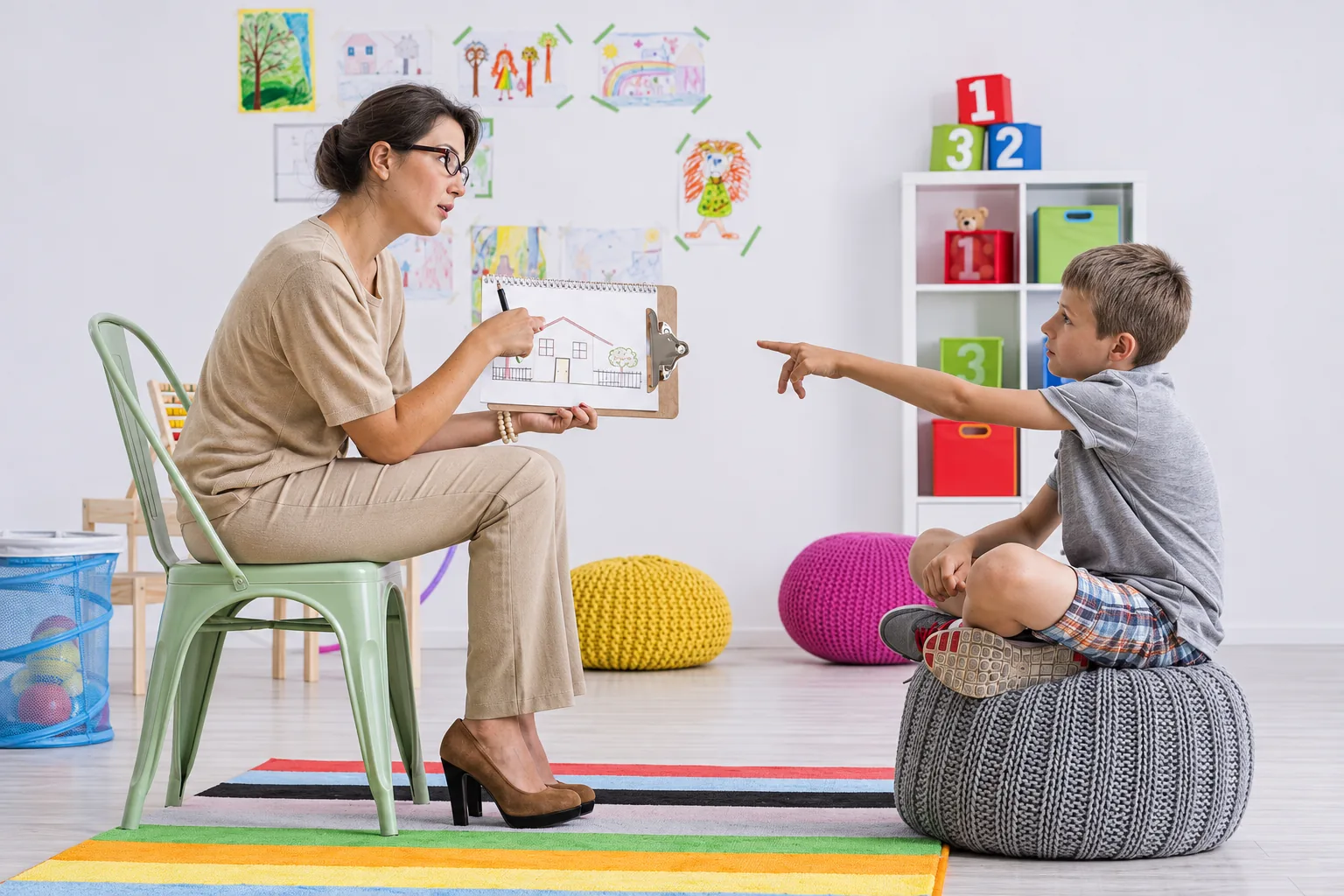
Our child therapists see kids ages 4 to 12. Play is used most with the younger kids in that range. For teens, see our teen therapy page.
Keep it short and true. For example, “You’re going to meet someone whose job is helping kids with big feelings. There are lots of toys and games there.”
Sometimes. Younger or shy kids may want you close at first, while others do fine alone. Your therapist will explain the plan before visits start.
There’s no set length. Some kids come for a few months, and some need longer. Early on, ask your therapist what changes at home would show progress, like an easier bedtime.
Your therapist can help you decide whether play therapy fits your child’s needs. If your child also needs speech therapy, applied behavior analysis (ABA), or psychological testing, those services would come from another provider. We can talk through next steps with you.
Most play therapy happens in our office. For some children, a few play-based activities can work by video with select therapists. We’ll check which therapists can see your child in Arizona, New York, or Hawaii.
Your therapist will explain your child’s privacy and your role as a parent. They will also explain when safety concerns or the law may require them to share information.
First visits are 75 minutes and range from $285 to $490, depending on the therapist. After that, fees start at $185 and depend on the visit length.
We do not accept insurance. You pay us directly for your child’s care. We can give you a special receipt called a superbill. You can send it to your insurance plan to ask if it will pay back part of the cost. Check with your plan first. Not all plans cover play therapy.
Book a Free 15-Minute Phone Consultation
We offer scheduled therapy visits. We do not provide emergency care. If your child is in crisis, call or text 988. If your child is in immediate danger, call 911.
Prefer a callback?