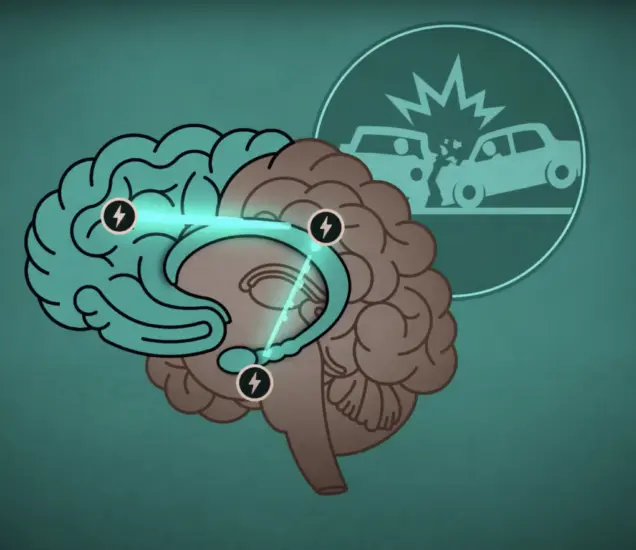
Upsetting memories can keep shaping how you feel today. EMDR gives adults a step-by-step way to work through hard experiences, starting with calming skills and without describing every detail. Meet at our Scottsdale office or ask about secure video with select therapists in Arizona, New York, or Hawaii.
A hard experience may still affect how you feel long after it’s over. You may experience a sudden rush of feelings or thoughts that take you back to that moment without warning.
Eye movement desensitization and reprocessing, or EMDR, is a therapy for working through upsetting memories. You don’t have to describe every detail out loud or relive the experience in full to work on those memories with a licensed therapist.
Book a Free 15-Minute Phone Consultation
Or call (480) 639-5559
We’ve cared for Scottsdale adults, teens, and families since 2012 in our office on East Shea Boulevard. Select therapists also offer secure video visits in Arizona, New York, and Hawaii.
Your therapist will ask you to concentrate on a specific memory. As you focus on the memory, your therapist guides you through eye movements, taps, or tones that alternate from side to side. Over time, the memory may feel less upsetting.
At Pathways Counseling Services, EMDR follows a step-by-step plan with eight phases. The first visits focus on your history and on calming skills that can help with your situation.
EMDR may not be the right first step for everyone. If it doesn’t fit your needs right now, your therapist can talk with you about other options at our practice.
A car accident, a medical scare, or a frightening night can stay with you long after it ends. You may think about it again and again, avoid places tied to it, or feel on edge without knowing why.
EMDR gives you and your therapist a step-by-step way to work on that one memory. You and your therapist decide which memory to work on and when you feel ready.
Time doesn’t always make a memory fade. A childhood trauma or a past relationship may still bring up the same shame or fear it did at the time.
Your therapist helps you choose where to start. You may start with an older memory or a recent event that brings up similar feelings.
Do you sometimes react strongly to something small and wonder why?
In EMDR, you and your therapist look for earlier experiences that may be connected to those reactions. Then you work on them one at a time, at a pace you choose.
For some people, worry or panic is tied to a specific experience. EMDR may be one option, and your therapist may also suggest cognitive behavioral therapy (CBT) if it fits better.

Your first visit is a time to get to know each other. You can share what’s been hard and what you hope will change, and you don’t have to share every detail yet. This visit is 75 minutes.
The next few visits usually focus on preparation. You’ll learn calming skills, like picturing a calm place or slowing your breathing, so you have tools ready before memory work starts.
When you begin working on a memory, your therapist may ask you to follow their hand or a moving light with your eyes. They may also use gentle taps that alternate from side to side. You can stop at any time. Your therapist checks in often and helps you calm down before each visit ends.
Some people feel more upset than usual for a day or two after a processing visit (vivid dreams can happen). Your therapist will talk with you about what to expect and make a plan with you.
Worried you’ll have to relive the hardest moment of your life? It’s a common worry, and an understandable one.
In EMDR, you have choices. You decide what to work on, you can pause when you need to, and calming skills come first.
If the free 15-minute call is as far as you want to go for now, that’s okay. You can tell us what’s going on and ask questions, with no commitment to start.
You choose who you work with. Our founder, Stephanie Levitt, is EMDRIA Certified.
Visit our team page to see which therapists offer EMDR and to read about their license, training, and who they work with.
If your therapist doesn’t feel like a good fit, let us know. We can help you look at other options.
For video visits, your therapist must be allowed to provide care in the state where you are during each visit. We’ll check which therapists can see you before you book.
Usually not. Your therapist needs a general sense of the memory, and you don’t have to describe it out loud, step by step.
EMDR is best known as a treatment for post-traumatic stress disorder (PTSD). Some people also come for other upsetting memories, anxiety, or panic, and your therapist will help you decide which approach may fit your needs.
No. You stay awake and aware during the visit, and you can stop when you want.
Some people focus on one event for a few months. Others work on a handful of experiences over a longer time, and your therapist will review your plan with you as you go.
It may be. Select therapists offer some EMDR visits by secure video when you’re in Arizona, New York, or Hawaii. We’ll check which therapists can see you in your state.
Ask us on your free call. We’ll discuss your teen’s needs and whether EMDR or another type of therapy may help. Your therapist will explain your child’s privacy and your role as a parent.
Cognitive behavioral therapy (CBT) works mainly with your thoughts, and dialectical behavior therapy (DBT) builds skills for strong emotions. EMDR focuses on specific memories and how they may still affect you.
Your therapist will explain what stays private and when safety concerns or the law may require them to share information.
We do not accept insurance. You pay us directly for your care. We can give you a special receipt called a superbill. You can send it to your insurance plan to ask if it will pay back part of the cost. Check with your plan first. Not all plans cover EMDR.
We offer scheduled therapy visits. We do not provide emergency care. If you’re in crisis, call or text 988. If you’re in immediate danger, call 911.
Prefer a callback?