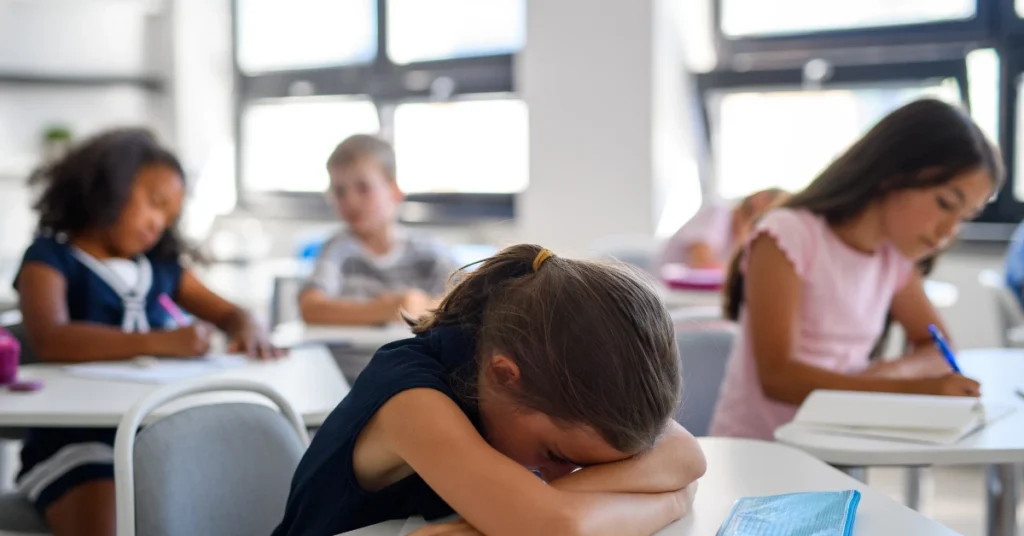
The most common signs of anxiety in children are worry that reassurance doesn’t settle, stomachaches or headaches with no medical cause, trouble sleeping, clinginess, meltdowns, and avoiding school or new situations. Some worry is a normal part of childhood. It becomes a concern when it’s bigger than you’d expect for your child’s age, lasts for weeks, and starts getting in the way of daily life.
Very few kids actually say “I’m anxious.” A 4-year-old screams at preschool drop-off. An 8-year-old gets a stomachache every Sunday night. An 11-year-old tears up a worksheet over one wrong answer. All three can be anxiety, and all three can also be a normal rough patch, so age and timing matter more than any single sign.
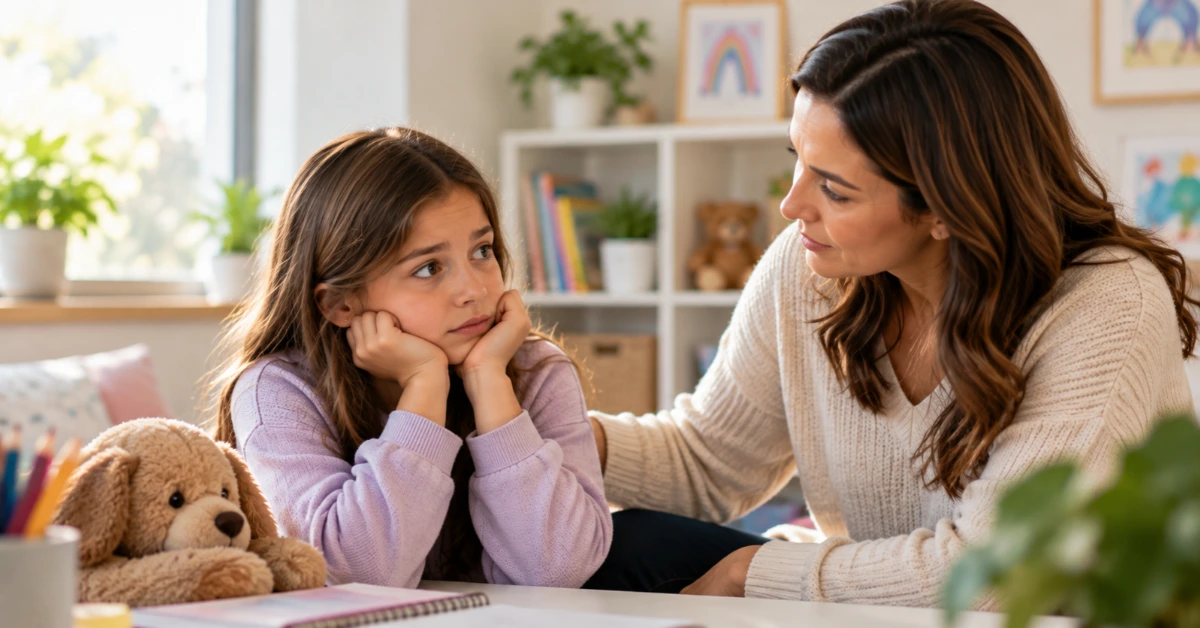
If your child’s worries are starting to shape your family’s days, child therapy at Pathways Counseling Services in Scottsdale can help you sort out what’s going on and what to try next. A child therapist meets with you and your child, then suggests an approach that fits your child’s age, such as CBT or play therapy. The first step is a free 15-minute phone consultation.
Key Insights
Anxiety in children usually shows up in their bodies and routines before they can put it into words. These are the points worth knowing before you decide what to do next.
- About 11% of US children ages 3 to 17 have a current anxiety diagnosis, according to CDC data from 2023-2024.
- Common signs include stomachaches with no medical cause, trouble sleeping, clinginess, meltdowns, and avoiding school or new situations.
- Age changes what's normal. Separation worries show up most in young school-age kids, fears about danger in preteens, and social worries in teens.
- Worry becomes a concern when it's bigger than expected for your child's age, lasts for weeks, and gets in the way of school, sleep, or friendships.
- An easy sign to miss is the family working around the fear, like answering the same question all evening or skipping outings.
- The US Preventive Services Task Force recommends anxiety screening at checkups for all children ages 8 to 18.
- CBT has the strongest research support, and a 2020 trial found a parent-only program lowered kids' anxiety as much as CBT with the child.
What Are the Most Common Signs of Anxiety in Children?
Anxious kids usually show it in their bodies and routines before they put it into words. Use the list below to notice patterns, not to reach a conclusion on your own.
In the Body
- Stomachaches, nausea, or headaches, especially on school mornings
- Lots of bathroom trips
- A racing heart or fast breathing when upset
- Eating much more or much less than usual
In Thoughts and Feelings
- “What if” questions about things going wrong
- Asking the same question over and over, even after you’ve answered it
- Fear of mistakes or of being embarrassed
- Worry about you when you’re apart
- Trouble focusing on schoolwork
In Behavior
- Crying hard or clinging at drop-off
- Skipping parties, sports, or anything new
- Meltdowns when plans change
- Redoing homework until it’s “perfect”
At Bedtime
- Can’t fall asleep without you in the room
- Nightmares or waking up a lot
Plenty of these overlap with stress, illness, poor sleep, or ADHD. One or two during a hard week is common. If you’re seeing a steady pattern for a few weeks, jot down what happens and when, and take those notes to your child’s pediatrician.
What Does Anxiety Look Like at Different Ages?
A fear that’s typical at 2 can be a warning sign at 9. That’s why your child’s age is the first thing to check before deciding whether a worry is normal.
Researchers have found that separation worries show up most in young school-age kids, fears about danger and death in preteens, and social worries in teens (Weems and Costa, 2005). The table below pulls that together with what pediatric references describe for toddlers.
Age | Typically Normal | Worth a Closer Look | What It Might Sound Like |
Toddlers (ages 1 to 3) | Upset when you leave, strongest between about 10 and 18 months. Wary of strangers until around age 2. Scared of loud noises. | Separation distress that’s still intense after age 2 and doesn’t ease soon after you go. Long meltdowns in new places. Stops playing or exploring. | “No go!” plus screaming at every drop-off for weeks |
Young children (ages 4 to 8) | Afraid of the dark, monsters, or animals. First-day jitters that fade within a few days. | A stomachache most school mornings. Won’t sleep alone. Worry about you that reassurance can’t touch. Turns down every playdate. | “What if you don’t come back?” |
Older children (ages 9 to 12) | Worries about storms, getting hurt, grades, or fitting in. Nerves before a test or recital. | Fears about danger or death that crowd out everything else. Falls apart over small mistakes. Won’t speak up in class. Needs reassurance all day. | “What if I fail?” or “Everyone will laugh at me” |
Toddlers (Ages 1 to 3)
Separation anxiety is an expected stage for toddlers. It tends to start around 8 months, peak between 10 and 18 months, and fade by about age 2 (Merck Manual, 2025).
Toddlers cry and cling for lots of reasons, so look at how long the upset lasts. A child who calms down 10 minutes after you leave is in a different place than one who can’t settle with any caregiver. At this age, your pediatrician is the right first call.
Young Children (Ages 4 to 8)
Monsters under the bed are normal at 5. Worry tied to separation, like panic about whether you’ll pick them up on time, is the pattern to watch in this age group.
Body complaints are a big clue here. If the tummy hurts every Monday but almost never on Saturday, your child may be telling you about worry the only way they can.
Older Children (Ages 9 to 12)
By 9 or 10, kids can describe their worries, though many keep them private. Their fears tend to move toward real dangers and what other kids think of them.
Perfectionism shows up a lot at this age. Erasing homework until the paper tears, or crying over a B, can point to more than high standards.
Teens more often worry about how they come across, and some pull away from family. If your child is 13 or older, our page on teen therapy in Scottsdale covers that age group.
How Can You Tell Normal Worry From an Anxiety Problem?
Normal worry is tied to something real, like a test or a move, and it fades once that thing passes. Anxiety that needs attention hangs around. It often shows up with no clear trigger, and little by little it changes what your child (and your family) will do.
Clinicians weigh four things, and the last one is the one parents tend to miss.
- Size. Is the fear bigger than you’d expect from other kids the same age?
- Time. For a diagnosis, separation worries in children are usually assessed over at least 4 weeks and general worry over about 6 months (American Psychiatric Association, 2022). You don’t need to wait that long to ask for help.
- Impact. Is it costing your child school days or friendships?
- Workarounds. Has the family started skipping outings, answering the same question all evening, or sleeping in your child’s room to keep the peace?
Normal Worry | Worry That Needs Attention |
Linked to a real event, like a test or a new school | Shows up most days, often without a clear reason |
Eases with comfort or once the event passes | Comes back right after reassurance |
Lasts days | Lasts weeks or months |
Your child still goes to school and joins in | Your child avoids school, friends, or activities |
Family routines stay about the same | The family changes plans to avoid upsetting your child |
You’re also far from the only parent asking. About 11% of US children ages 3 to 17 have a current anxiety diagnosis, according to the CDC (2023-2024 data). The US Preventive Services Task Force now recommends screening every child from age 8 to 18 for anxiety at checkups (USPSTF, 2022).
Why Is Anxiety in Children So Easy to Miss?
Because it rarely looks like worry. A child who digs in their heels about getting in the car for school can look stubborn when they’re actually scared.
Repeated stomachaches send a lot of families to the doctor long before anyone mentions anxiety. That’s a reasonable first step, since a pediatrician should rule out medical causes. Worry can also make it hard to focus, which sometimes gets mistaken for ADHD.
Then there’s the quiet kid who follows every rule and never causes trouble. Some of those children are working very hard to keep their fear hidden, and teachers may be the first to notice. Missing it at first is common, and it doesn’t mean you overlooked your child.
When Should You Seek Help for Your Child’s Anxiety?
If the worry has lasted a few weeks and it’s affecting school or sleep, it’s time to talk to someone. You don’t have to be sure it’s anxiety first.
- Keep notes for a week or two on what happens, when, and what seems to set it off.
- See your child's pediatrician to rule out medical causes. For kids 8 and up, ask about an anxiety screening.
- Ask the teacher or school counselor what they see during the day.
- Call a licensed child therapist for an assessment, even if you're unsure.
If your child talks about hurting themselves or wanting to die, call or text 988 to reach the 988 Suicide & Crisis Lifeline, available 24 hours a day. If your child is in immediate danger, call 911. Outpatient counseling is not emergency care.
What Happens at Your Child’s First Appointment?
Expect a conversation. The therapist usually talks with you and your child together, then separately, about what you’ve noticed and how your child sees things.
Some clinicians also use a short questionnaire such as the Screen for Child Anxiety Related Disorders (SCARED), with one version for parents and one for kids. It’s one piece of the assessment and doesn’t give a diagnosis by itself. Bring along:
- Your notes, including when the worries started
- Anything that changed around that time
- What you’ve tried at home
- Comments from teachers or your pediatrician
Want to know costs before you call? Our therapy fees and rates page lays them out.
Not sure whether what you’re seeing is anxiety? Talk to a child therapist. Schedule a free 15-minute phone consultation or call (480) 639-5559.
How Can You Help Your Child With Anxiety at Home?
How you respond at home makes a real difference. In a 2020 trial with 124 children ages 7 to 14, a program that worked only with parents lowered kids’ anxiety as much as CBT done directly with the child (Lebowitz et al., 2020).
That program teaches parents two things. Respond with understanding and confidence at the same time, and slowly cut back on the ways the family works around the fear. Day to day, it can look like this:
- Say what you see in calm words, such as “You look worried about tomorrow.”
- Pair understanding with confidence: “I know this feels scary, and I know you can handle it.”
- If you’re answering the same question 10 times a day, tell your child you’ll answer it once. Change one thing at a time and give a heads-up first.
- Break a big fear into small steps, like visiting the classroom after hours before the first day.
- Practice slow breathing while your child is calm, so it’s familiar when they need it.
- Loop in the school. Teachers can help with drop-offs or a quiet break, and our guide to school anxiety and school refusal goes deeper on this.
What to Avoid
Reassuring over and over brings quick relief, but the questions usually come right back. Steering around every trigger tends to make the fear grow. “There’s nothing to be scared of” can leave a child feeling unheard, and pushing too far too fast backfires too.
Give these a few weeks. If anxiety is still running your family’s schedule after that, a therapist can build a plan with you.
What Treatments Help Children With Anxiety?
CBT has the strongest backing. The American Academy of Child and Adolescent Psychiatry recommends offering it to kids and teens ages 6 to 18 with common anxiety disorders (Walter et al., 2020).
In cognitive behavioral therapy, kids learn to catch worried thoughts and test them against what’s actually happening. Then they face their fears in small, planned steps. Younger children often do better with play therapy, since play is how they naturally work through feelings.
Parent-focused sessions can help when a child is very young or won’t go to sessions at all. When anxiety started after a scary or painful event, EMDR therapy may be worth asking about. And if the worry is affecting everyone at home, family therapy is another option.
Some children with more severe anxiety also take medication. That’s a decision for a prescriber, such as your pediatrician or a child psychiatrist. You can meet our therapists to see who works with children.
The Bottom Line
Your next step depends on what you’re seeing. If it’s a new worry tied to a recent change, like a move or a new school, give it two or three weeks and use the home steps above.
If the signs have lasted longer than that, or your child is missing school or avoiding friends, book a pediatrician visit and bring your notes. And if your family has quietly rearranged its routines around the fear, call a child therapist now rather than waiting to see if it passes.
Frequently Asked Questions
What Are the Signs of Anxiety in Children?
Signs of anxiety in children include worry that doesn’t settle with reassurance, stomachaches or headaches without a medical cause, sleep trouble, clinginess, meltdowns, and avoiding school or new things. They’re a concern when they’re bigger than expected for your child’s age and last for weeks.
At What Age Does Anxiety Start in Children?
Anxiety can start at almost any age in children. Separation anxiety is a normal stage that begins around 8 months and usually fades by 2. Anxiety that gets in the way of daily life can begin in preschool or any time after.
What Does Anxiety Look Like in a 3-Year-Old?
In a 3-year-old, anxiety often looks like intense clinging, long meltdowns at separations or in new places, and not sleeping without a parent. Some clinginess is normal at 3. Talk to your pediatrician if it’s intense or lasts for weeks.
Is There a Childhood Anxiety Symptoms Checklist I Can Use?
A childhood anxiety symptoms checklist like the one above can help you spot patterns, but it can’t tell you whether your child has an anxiety disorder. Clinicians often use a questionnaire called the SCARED as part of an assessment. Bring your notes to your pediatrician or a child therapist.
What Is the 3-3-3 Rule for Anxiety in Children?
The 3-3-3 rule for anxiety in children is a grounding exercise: name 3 things you can see, 3 things you can hear, and move 3 parts of your body. It works best when your child has practiced it while calm. It’s a coping tool, not a treatment.
Sources
- American Psychiatric Association. (2022). Diagnostic and Statistical Manual of Mental Disorders (5th ed., text rev.). psychiatry.org
- Centers for Disease Control and Prevention. Data and Statistics on Children’s Mental Health (National Survey of Children’s Health 2023-2024). cdc.gov
- US Preventive Services Task Force. (2022). Screening for Anxiety in Children and Adolescents: Recommendation Statement. uspreventiveservicestaskforce.org
- Walter, H. J., Bukstein, O. G., Abright, A. R., Keable, H., Ramtekkar, U., Ripperger-Suhler, J., & Rockhill, C. (2020). Clinical practice guideline for the assessment and treatment of children and adolescents with anxiety disorders. Journal of the American Academy of Child & Adolescent Psychiatry, 59(10), 1107-1124. doi.org/10.1016/j.jaac.2020.05.005
- Lebowitz, E. R., Marin, C., Martino, A., Shimshoni, Y., & Silverman, W. K. (2020). Parent-based treatment as efficacious as cognitive-behavioral therapy for childhood anxiety: A randomized noninferiority study of Supportive Parenting for Anxious Childhood Emotions. Journal of the American Academy of Child & Adolescent Psychiatry, 59(3), 362-372. doi.org/10.1016/j.jaac.2019.02.014
- Weems, C. F., & Costa, N. M. (2005). Developmental differences in the expression of childhood anxiety symptoms and fears. Journal of the American Academy of Child & Adolescent Psychiatry, 44(7), 656-663. doi.org/10.1097/01.chi.0000162583.25829.4b
- Consolini, D. M. (2025). Separation Anxiety and Stranger Anxiety. Merck Manual Consumer Version. merckmanuals.com
- British Columbia Ministry of Health. Anxiety and Depression in Children and Youth: Diagnosis and Treatment, Appendix A. gov.bc.ca